What Czechs actually do at Christmas
Czech Christmas is organised around the evening of 24 December: Ježíšek brings the presents, carp is the meal, and gifts are opened after a bell, not on the morning of the 25th. This guide sets out those household customs and what they mean for visitors when shops close and the city goes quiet.
About the facts in this text: the checked dates and the links to every organiser are on the list of all markets (checked 21 September 2026). Opening hours, prices and programme mentioned in the running text refer to the 2025/26 season or to the state of the organiser's page when this was written — check before you travel.
The main day is 24 December
Christmas in Czech households is built around the evening of 24 December, called Štědrý den (Generous Day). That is when the family eats the main meal, the Christmas tree is shown with its lights on, and presents are opened. 25 December is a public holiday, but it is not the day around which the domestic ritual is organised.
The public holidays in this season are 24 December 2026 (Thursday, Christmas Eve / Štědrý den), 25 December 2026 (Friday, Christmas Day / 1. svátek vánoční), 26 December 2026 (Saturday, St Stephen's Day / 2. svátek vánoční) and 1 January 2027 (Friday, New Year's Day). The family event that matters most is still the evening of the 24th.
Ježíšek brings the presents
Czech children are told that Christmas presents come from Ježíšek, the Baby Jesus, not from Santa Claus. Ježíšek is not portrayed by an adult in a costume on Christmas Eve. Children are usually told that Ježíšek cannot be seen. In practice they wait in another room, or keep their backs to the tree, until a small bell is rung. They then come in to find parcels under the lit tree. A common warning is that if a child tries to catch Ježíšek in the act, the gifts may not appear.
The red-suited Santa figure seen on shop fronts is an imported commercial image. It is not the Czech explanation of who brings the Christmas gifts. St Nicholas (Mikuláš) belongs to a different date: the evening of 5 December, when a figure in bishop's dress, often with an angel and a devil, visits children. That custom is separate from Christmas Eve.
Carp, street tubs and the bathtub
The traditional Christmas Eve fish is carp. In December, live carp are sold from temporary street tanks in Czech towns, including Prague. Some families used to take a live fish home and keep it in the bathtub for a day or two, then kill and cook it themselves. That household practice is less common than it once was, but it remains a well-known story. Many families now buy carp already killed, gutted or filleted from a fishmonger or a supermarket fish counter.
The tubs on the pavement are seasonal fish stalls serving a domestic demand. They are not a show put on for visitors, and they are not unique to Prague.
Dinner, the daytime fast and the golden pig
A standard Christmas Eve supper has three parts:
- fish soup (rybí polévka), often made from the head and trimmings;
- fried breaded carp (smažený kapr);
- potato salad (bramborový salát), typically bound with mayonnaise.
Other ingredients in the salad — potato, pickled vegetables, onion and often peas — vary by household. Other dishes appear on some tables, but this sequence is the usual reference point.
Christmas Eve was kept as a fast day in the older religious sense: no meat, and often little food before the evening meal. A folk belief attached to that wait is the golden pig (zlaté prasátko). Someone who lasts until dinner, the story says, may see it. It is domestic folklore, often treated as a joke at the table, not a teaching of the church. Families who no longer fast still tend to know the story.
The bell, the gifts and midnight mass
Presents are opened on the evening of 24 December, after dinner, once the bell has been rung to mark that Ježíšek has come. They are not held back for the morning of the 25th. The tree itself is often kept behind a closed door, or out of the child's view, until that moment; lighting it and revealing the gifts belong together.
Some households then go out to midnight mass (půlnoční mše). For some families this is a once-a-year church visit. Mass times are set parish by parish and are posted locally, usually in December. There is no single city-wide timetable published in advance for 2026/27. Exact times for this season should be checked with individual churches in December.
What 25 and 26 December are for
25 December is a quiet public holiday used for leftover food, rest and visits to relatives. Cold carp and leftover potato salad are ordinary food that day. 26 December, St Stephen's Day, is a second public holiday used in much the same way, and sometimes for a trip out of town. Neither day is the present-opening morning familiar from British or American homes. The gifts have already been opened the night before.
What this means for a visitor
On the evening of 24 December the centre of Prague is quiet because Czechs are at home. Large shops with a sales floor over 200 square metres must close from 12:00 on 24 December under Act No. 223/2016 Sb.; chains typically stop admissions around 11:30–11:45. Shops under 200 square metres, petrol stations, pharmacies, and shops at airports, railway stations and bus stations may stay open. Large shops are closed all day on 25 and 26 December.
Restaurants are not covered by that shop law. Many Czech restaurants close for family Christmas Eve, while some tourist restaurants stay open or serve a set menu. Which kitchens will cook in 2026 is not a legal schedule.
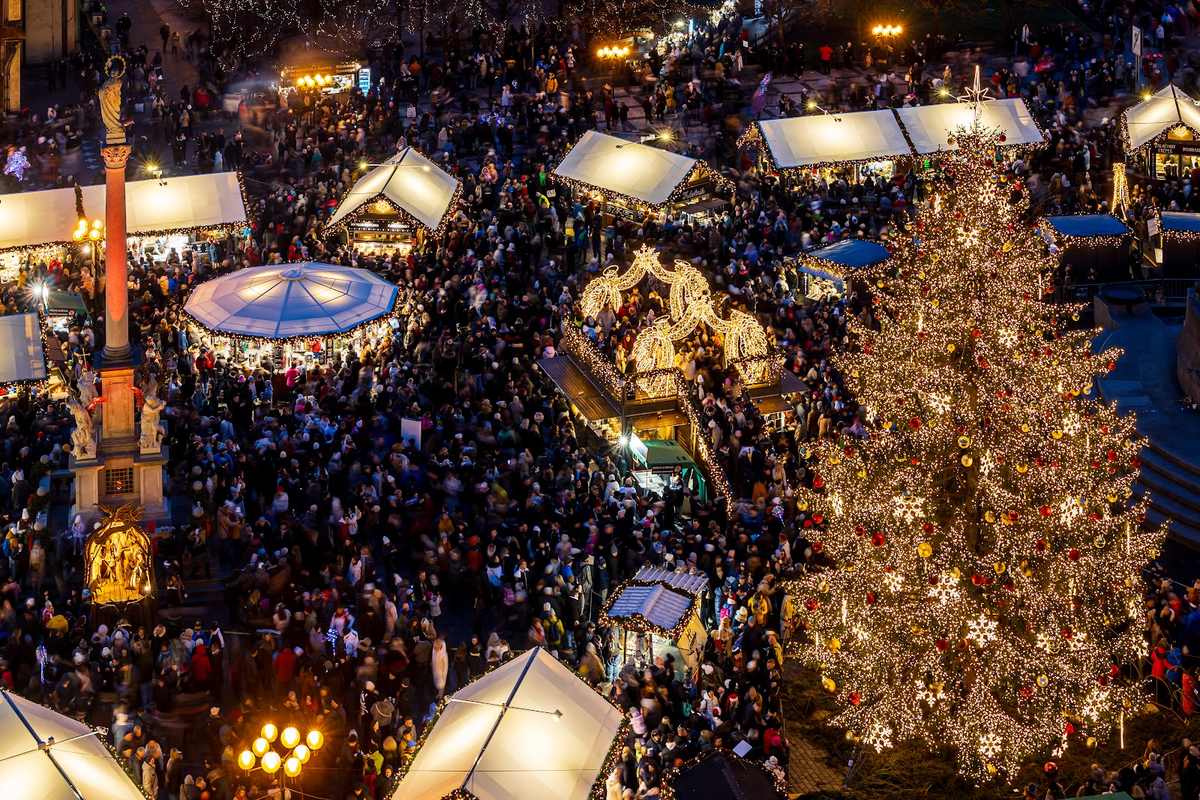
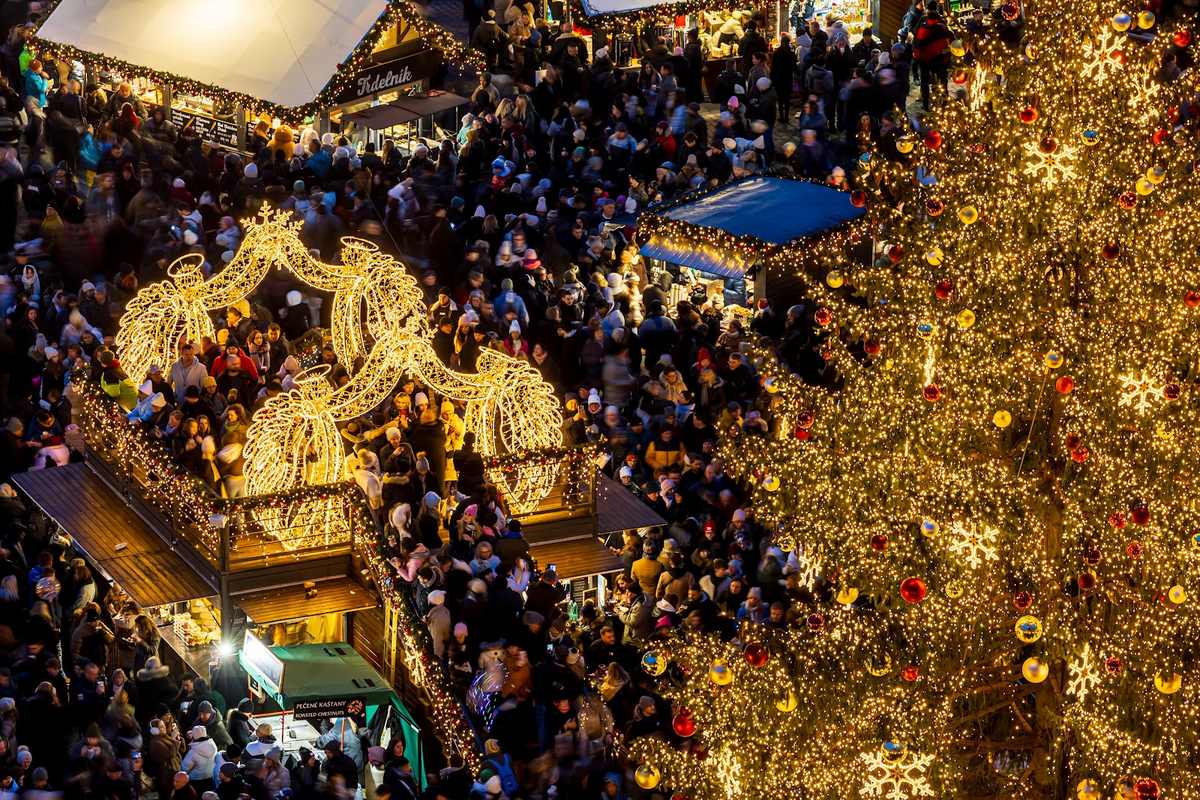
The Old Town Square and Wenceslas Square Christmas markets are confirmed from 28 November 2026 to 6 January 2027. In 2025 those two markets were open 10:00–14:00 on 24 December; 2026 holiday hours are not fully published. The markets at Náměstí Míru and Náměstí Republiky are listed to 24 December 2026. Prague Castle ticketed interiors were closed all day on 24 December 2025; 2026 castle Christmas hours have not yet been published.
Common questions
Who brings Christmas presents in Czechia?
Ježíšek, the Baby Jesus, is the gift-bringer in Czech homes, not Santa Claus. Children are told that Ježíšek cannot be seen; they wait in another room until a bell is rung, then find the parcels under the tree. St Nicholas (Mikuláš) visits on the evening of 5 December and is a separate custom.
When do Czechs open Christmas presents?
On the evening of 24 December, after Christmas Eve dinner, when a bell is rung to mark that Ježíšek has come. Presents are not opened on the morning of 25 December.
Why are there live carp in tubs on Prague streets in December?
Carp is the traditional Christmas Eve fish. Live fish are sold from temporary street tanks for the household meal. Some families once kept a carp in the bathtub before cooking it; many now buy it already killed, gutted or filleted.
Are Prague shops and restaurants open on 24 December?
Large shops over 200 square metres must close from 12:00 on 24 December; chains typically stop admissions around 11:30–11:45. Small shops, petrol stations, pharmacies and shops at airports or stations may stay open. Restaurants are not covered by that law: many Czech restaurants close for family Christmas Eve, while some tourist restaurants stay open or serve a set menu. 2026 restaurant lists are not a legal schedule.
What are 25 and 26 December for in Czechia?
Both are public holidays. 25 December is used for leftover food, rest and family visits. 26 December, St Stephen's Day, is used in much the same way, and sometimes for a trip. Neither is the main gift-opening day.